Five hours in the north of Gran Canaria. Back by three.
Teror, Firgas, Arucas and the Arehucas rum cellar. Pick-up at 09:45 at the El Muelle Tourist Information Office, back at the same spot at 15:00.
How late can you leave it?
This is the question that sends most passengers to the ship's own excursion desk at roughly twice the price, and it's a fair worry: an independent trip is cheaper precisely because the ship isn't underwriting it, which also means the ship won't wait.
So do the arithmetic yourself. Take your all-aboard time — usually thirty to sixty minutes before sailing. Subtract the drive back: about twenty-five minutes from the northern villages, against an hour or more from the south. What's left is what you actually have. In the north you finish with the afternoon to spare. In the south you finish watching the clock.
There is one excursion built around exactly this problem. It picks you up in the cruise quay area at 09:45 and has you back at the same spot at three: Teror, Firgas, Arucas and the Arehucas cellar with the rum tasting, in a 22-seat minibus with a local guide. If your all-aboard is half past four or later, the arithmetic works with room to spare.
 Teror
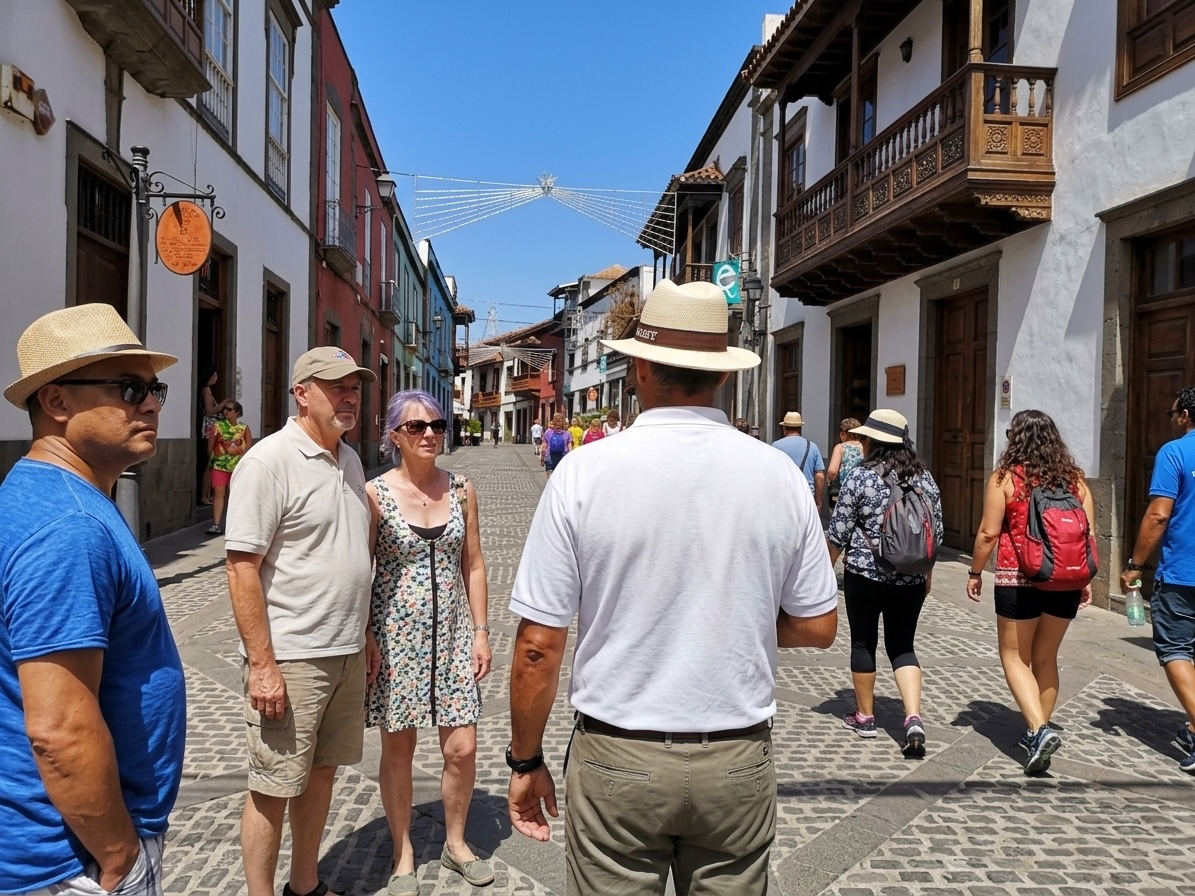
TerorOne street of carved wooden balconies leading to the basilica of the island's patron saint. Sunday-quiet on a weekday.
 Firgas
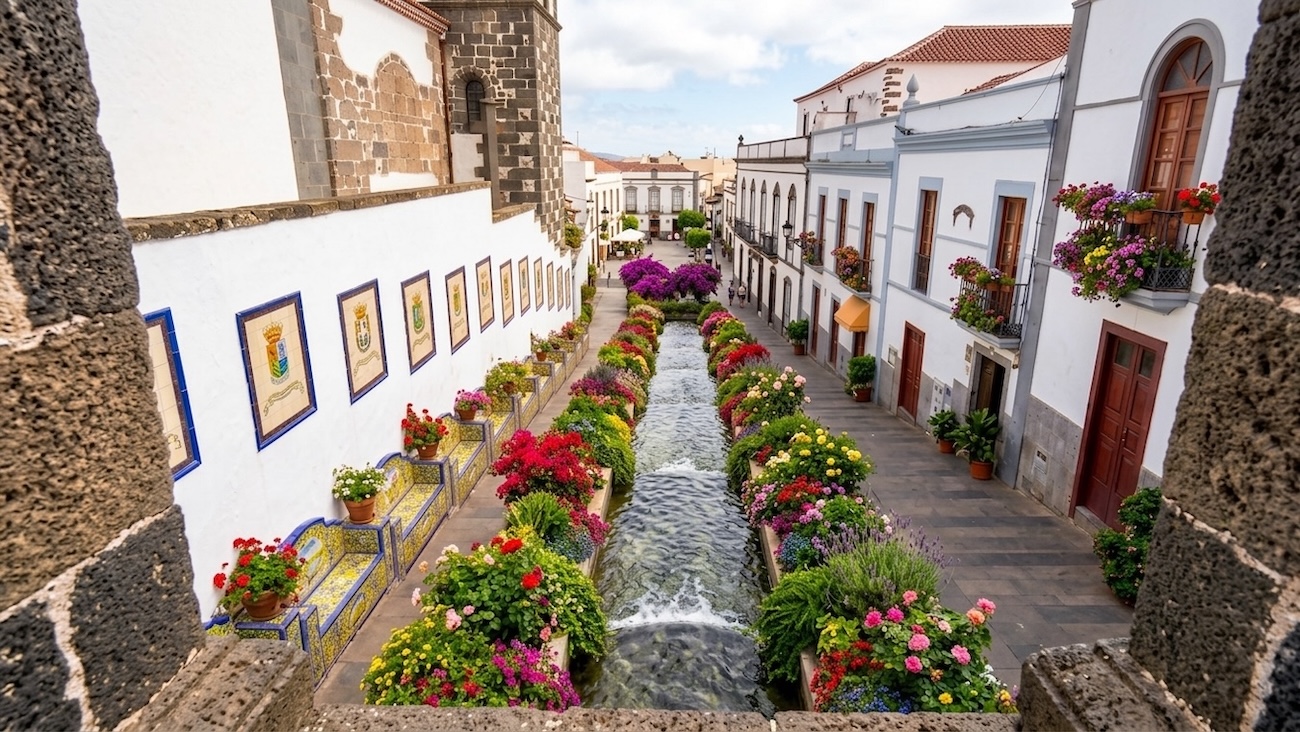
A village that built its main street around a thirty-metre waterfall in carved stone. Photo stop.
 Arucas
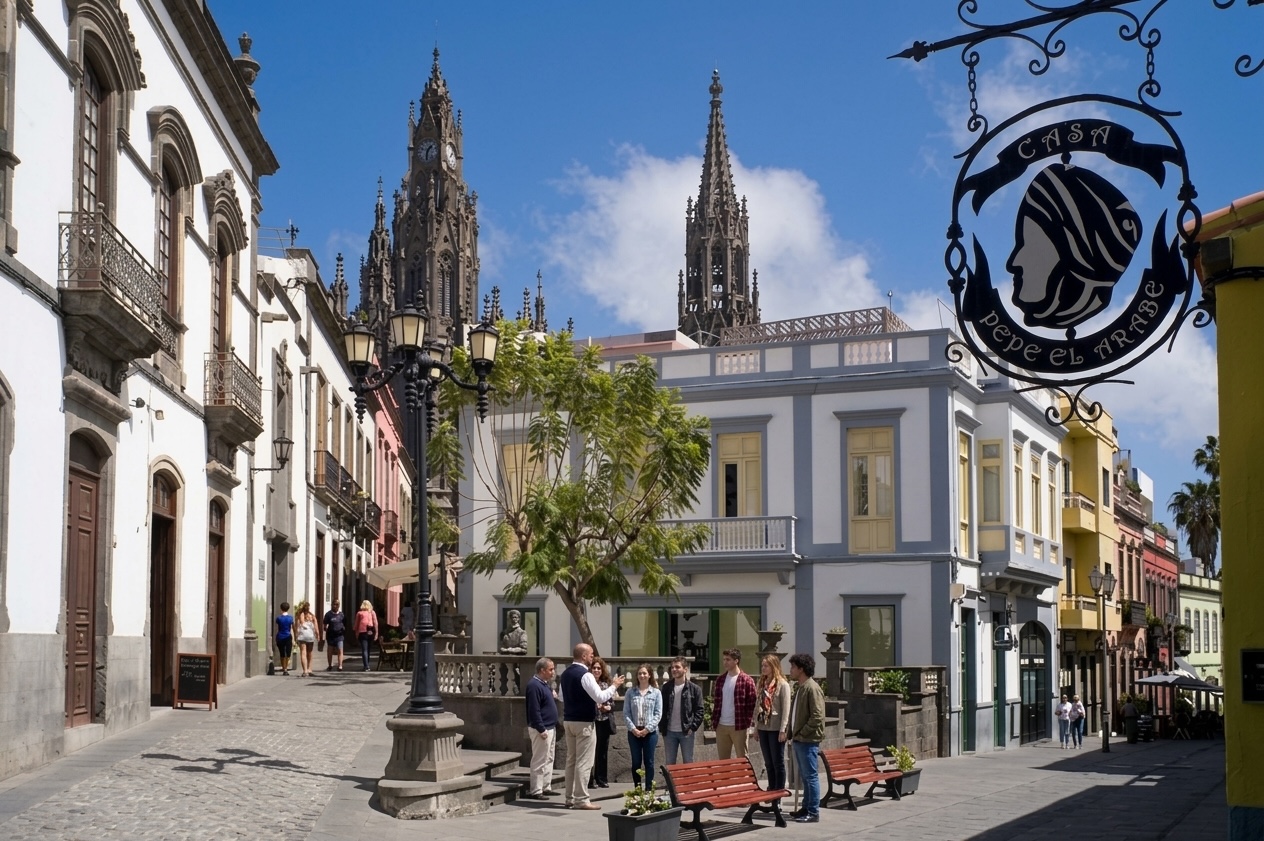
A church of black volcanic rock so big everyone calls it the cathedral.
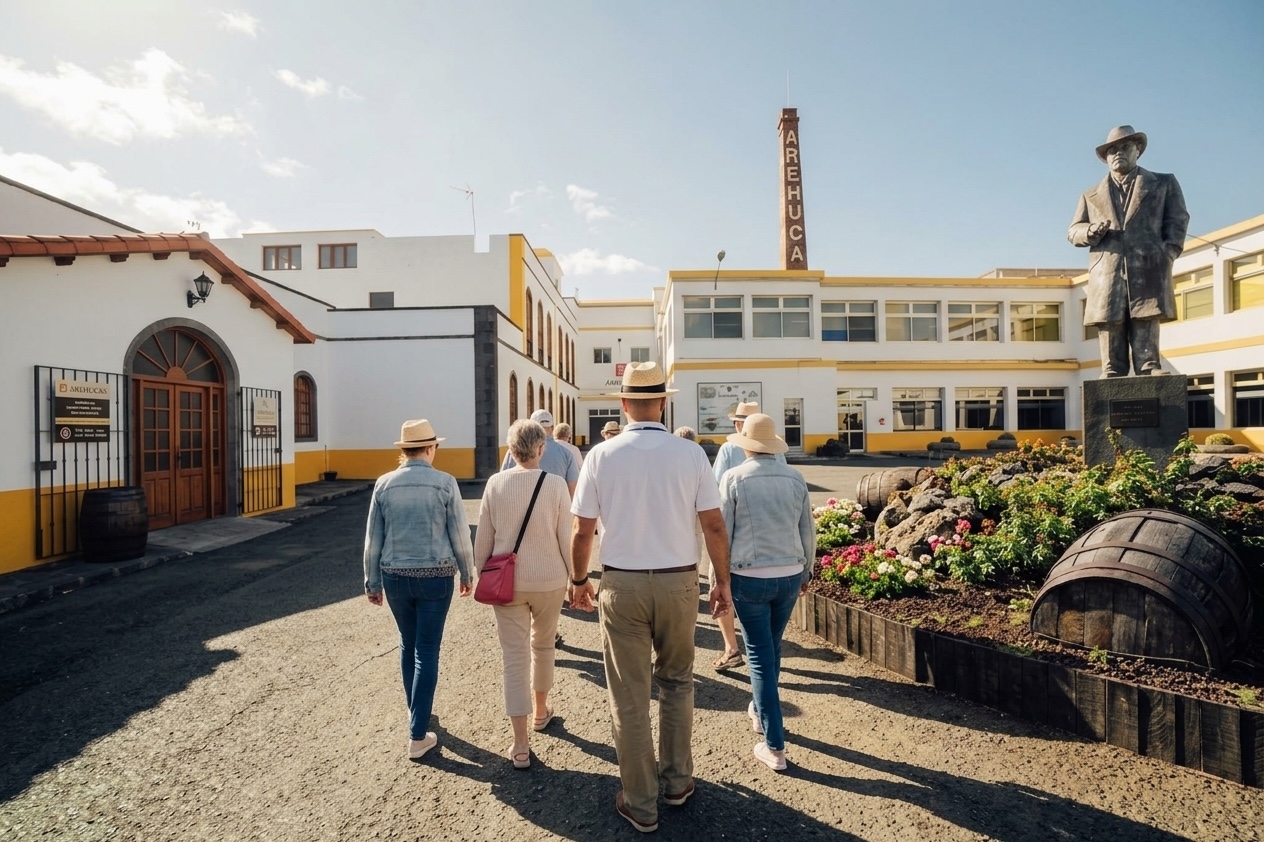 Arehucas cellar
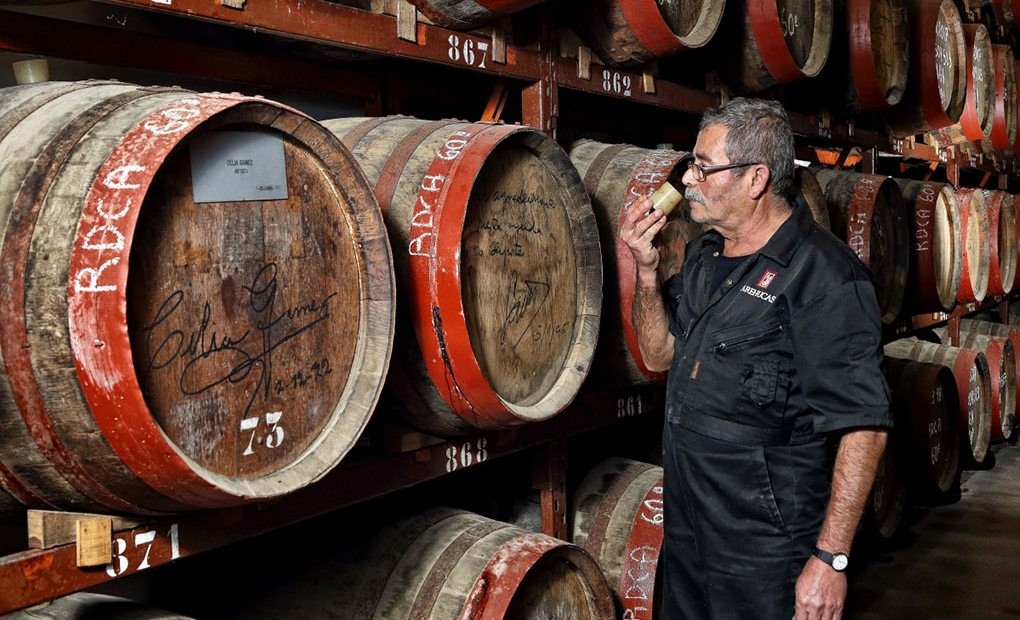
Distilling since 1884. Oak barrels signed by visitors, then a tasting before the drive back.
What if my ship docks late?
Pick-up is at 09:45. If your ship is scheduled in after 9:15, this departure won't work for you — check your arrival time before booking.
Where exactly do we meet?
At the El Muelle Tourist Information Office (Muelle de Santa Catalina, 4), at 09:45. Depending on where your ship docks it may be closer or further away, so allow time to get there. The address and a phone number are on your voucher.
Will I be back before all-aboard?
We drop you back at the same Tourist Information Office at 15:00. Most ships sail at 17:00 or later; if your all-aboard is before 16:30, don't book this one.
Is there time to eat?
No meal is included and the stops are short. Have breakfast on board and lunch when you're back — the ship or Las Canteras are both close.
I'm boarding this afternoon / I got off this morning. Can I come?
Yes, as long as you can be at the El Muelle Tourist Information Office at 09:45. We drop you back at the same spot at 15:00; from there you continue on your own.
Can I cancel?
Free of charge up to 24 hours before departure.
Las Palmas cruise port: what to do with your hours ashore
Whether your ship sails this afternoon, boards this evening, or you walked off it this morning with a flight to catch tonight, you are in the same position: about six hours, and a time you cannot be late for. This page is about what is worth doing with them.
Most people spend them badly, and it isn't their fault. It's a map problem.
Everyone goes south. South is the wrong way
Search Gran Canaria and you get the dunes of Maspalomas, Playa del Inglés, Puerto Rico — sand, high-rises, the postcard. Every one of them sits at the far end of the island, 45 to 50 kilometres from your berth. That is an hour of motorway out and an hour back, on a good day. Two of your six hours spent watching the hard shoulder, to reach a beach resort you could find in four other countries.
The north begins about ten kilometres from the quay. Same island, a quarter of the distance, and it is the half that looks like what you pictured before you came: banana terraces cut into the hillside, black volcanic stone, villages that disappear into cloud at four hundred metres. This is not a local preference. It is a map.
Three villages and a rum cellar
Teror is where the island goes when it wants something. One street of dark wooden balconies, carved and overhanging, leading up to the Basilica of Our Lady of the Pine — the patron of Gran Canaria, and the reason half the island turns up here every September. On an ordinary Tuesday it is quiet, and the balconies are still there.
Firgas built its main street around a waterfall. Thirty metres of water running down carved stone in the middle of a village of two thousand people, with the coats of arms of every municipality on the island set into the walls beside it. It sounds like a municipal folly and it is completely charming.
Arucas has a church of black volcanic rock so large that everybody calls it the cathedral, though it never was one. It took the best part of the twentieth century to build, by local stonemasons, out of stone quarried up the road.
And then the cellar. Destilerías Arehucas has been distilling since 1884 — one of the oldest rum houses still working anywhere in Europe. You walk between barrels of American oak stacked to the ceiling, the air heavy and sweet, reading the signatures on the wood. At the end, you taste. It takes about an hour and it is the thing people describe when they get back on the ship.
If you'd rather stay in town
That works too. Vegueta, the old quarter, is about fifteen minutes' walk from the port or a short taxi ride: cobbled streets, Santa Ana Cathedral and the Casa de Colón.
